For centuries, before GPS and compasses, people looked to the stars for direction. Among all those distant lights, one stands still — Polaris, the North Star. It has guided explorers, sailors, and dreamers through the ages. But finding it in the vast sky might seem tricky unless you know where to look.
Luckily, nature gave us a giant cosmic signpost: the Big Dipper. With its bright stars and easy-to-spot shape, it's like a celestial pointer straight to Polaris. Once you learn the trick, you'll never look at the night sky the same way again.
Spotting the Big Dipper
If you've ever looked up on a clear night in the Northern Hemisphere, you've probably seen the Big Dipper — even if you didn't realize it. It's not actually a constellation on its own but part of a larger one called Ursa Major. Yet its simple, familiar shape makes it one of the easiest star patterns to recognize.
Learn Its Shape and Season
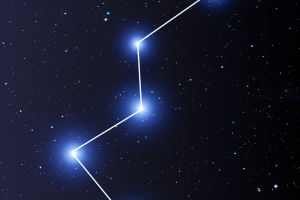
The Big Dipper looks like a giant ladle — four stars form the bowl, and three make up the handle. The two outer stars of the bowl are called Dubhe and Merak, and they're your guides to Polaris. Depending on the season, the Big Dipper changes position in the sky. In spring and summer, it's high overhead; in autumn and winter, it swings lower toward the horizon. No matter where it goes, it always points to the same place — north.
Find a Dark, Clear Sky
City lights can make star-spotting tough. If you can, head to an open field, a lakeside, or even a quiet park where the sky is darker. Let your eyes adjust for about 10 minutes. You'll start to see fainter stars — and the Dipper will stand out as a bright, easily recognizable shape.
Use It as a Sky Anchor
Once you've located the Big Dipper, use it as your anchor. Even if other constellations shift through the night, this one will help you orient yourself. Think of it as your celestial compass handle — steady, reliable, and always pointing the way home.
Following the Dipper to Polaris
Now comes the fun part — using the Big Dipper to find Polaris, the star that marks true north.
Draw the Line
Look at the two stars forming the right edge of the Dipper's bowl — Dubhe at the top and Merak below it. Imagine a straight line running upward from Merak through Dubhe and keep extending it about five times the distance between those two stars. At the end of that invisible line, you'll see a single bright star standing apart from others — that's Polaris, sitting proudly in the constellation Ursa Minor, or the Little Dipper.
Confirm You've Found It
Polaris isn't the brightest star in the sky (that's Sirius), but it shines steadily and doesn't move much through the night. If you trace the curve of the Big Dipper's handle in the opposite direction, you'll notice another bright orange star — Arcturus — in the constellation Bootes. This helps confirm that you've drawn your lines correctly: one leads you to Polaris (north), the other curves to Arcturus (east).
Understand Its Magic
What makes Polaris special is its position almost exactly above the Earth's North Pole. That's why it appears fixed while other stars seem to rotate around it. No matter where you are in the Northern Hemisphere, Polaris always points north. Ancient travelers, from desert caravans to Viking sailors, used it to navigate long before compasses existed. Today, hikers, campers, and stargazers still rely on it when technology fails — or simply to feel connected to the same sky our ancestors watched.
Make It a Habit
Once you learn this simple trick, try it each time you're outdoors at night. See how the Big Dipper shifts with the seasons yet always leads you to the same steady star. Over time, you'll begin to recognize other constellations around it — Cassiopeia opposite the Dipper, Draco winding nearby. The night sky will start to feel familiar, like a map you've known all along.
Finding Polaris isn't just a cool astronomy trick — it's a reminder of how deeply humans have always connected with the stars. With just the Big Dipper as your guide, you can locate true north anywhere under a clear northern sky. So next time you're outdoors, look up, trace that invisible line, and find the North Star shining quietly above. It's not just a point of light — it's a symbol of direction, constancy, and wonder that has guided travelers for millennia. This content is for entertainment and general insight only and does not constitute professional advice.