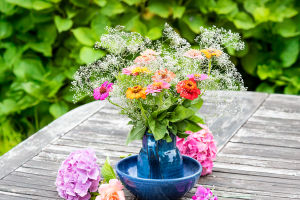
There's something magical about a fresh bouquet on a table.
It doesn't just look nice—it changes the mood of the room, makes mornings feel brighter, and can even lift your spirits after a long day.
But arranging flowers at home isn't always easy. Without a plan, stems can flop, colors clash, or the arrangement looks awkward. The secret is knowing a few practical techniques that make every bouquet look intentional and balanced.
Choose the Right Flowers and Vase
Everything starts with selection. The flowers themselves and the container you choose define the overall style.
1. Match flower size to vase height
As a rule, stems should be about 1.5 to 2 times the height of the vase. Taller flowers in short vases look cramped; short flowers in tall vases feel lost.
2. Balance colors and textures
Pick one dominant color, one secondary color, and a few accent blooms. Include varying textures like soft petals, spiky stems, or leafy greens to add depth.
3. Consider the room style
A sleek glass vase suits modern spaces, while a rustic ceramic or mason jar complements cozy or traditional interiors.
Actionable example: For a 10-inch vase, choose stems around 15–20 inches and mix one large focal flower like a sunflower with smaller blooms like daisies and greenery.
Prepare Flowers Properly
Prepping flowers before arranging keeps them fresh and helps them hold their shape.
Trim stems at an angle
Cutting at a diagonal allows more water uptake than a straight cut. Trim about an inch from the bottom.
Remove lower leaves
Leaves submerged in water can rot and shorten the life of the bouquet. Remove any foliage that will sit below the water line.
Hydrate before arranging
Place flowers in clean water for at least an hour to let them perk up. This also prevents stems from drooping in the final arrangement.
Actionable example: Fill a bucket with room-temperature water and flower food, then let trimmed stems soak for 30–60 minutes before arranging.
Build a Balanced Structure
An unstructured bouquet often looks messy or lopsided. Start with a strong framework.
Begin with greenery
Create a base by arranging leafy stems around the edges and center. This sets the shape and volume.
Add focal flowers next
Place the largest blooms first, spacing them evenly. These anchor the design visually.
Fill gaps with secondary flowers
Use smaller flowers to add layers, depth, and color balance. Rotate the vase as you work to ensure all sides look good.
Actionable example: Start with three stems of greenery forming a triangle, then place three focal flowers in the center, filling gaps with smaller blooms and leaves for an even shape.
Pay Attention to Height and Depth
Varied height and depth make the arrangement look lively and natural instead of flat.
Avoid uniform stem lengths
Slightly staggered heights create movement. Taller flowers draw the eye up, while shorter blooms add texture below.
Layer flowers
Position some stems closer to the vase center and some toward the edge. This prevents the bouquet from looking like a single plane.
Step back and adjust
Regularly view the arrangement from different angles to check balance and make small tweaks as needed.
Actionable example: Keep one or two stems slightly taller than the rest to act as a subtle focal point, and rotate the vase 360 degrees to spot empty spots that need filling.
Maintain the Arrangement Longer
Even a perfect bouquet will fade without proper care.
Change water regularly
Replace water every two days and recut stems to prevent bacteria buildup.
Remove wilting flowers
Pulling out fading stems keeps the arrangement looking fresh and encourages other blooms to last longer.
Keep away from heat and direct sunlight
Too much warmth accelerates wilting, so place arrangements in cooler areas.
Actionable example: Use flower food packets or a homemade mix of sugar, lemon, and a drop of bleach to nourish flowers and limit bacteria in the water.
A thoughtfully arranged bouquet can transform a living space, turning any corner into a little moment of beauty. With careful flower selection, proper prep, structured arranging, and ongoing care, even simple stems can feel elegant and lively. The small attention to height, depth, and balance makes the difference between a random bunch and a stunning centerpiece. Once you practice these techniques, arranging flowers at home becomes an effortless way to bring nature and style into everyday life.