Watching a giraffe stroll across the savannah, neck swaying gracefully, it's hard not to be captivated.
Their towering presence and unique patterns make them instantly memorable, but there's far more beneath the surface than just height.
From unusual feeding habits to fascinating social behaviors, giraffes are full of surprises that even seasoned wildlife enthusiasts find intriguing.
Unmatched Height and Anatomy
Giraffes are the tallest land mammals on Earth, a feature that affects almost every aspect of their life.
1. Neck structure – Despite being up to 6 meters tall, giraffes have only seven neck vertebrae—the same number as humans. Each vertebra is elongated, allowing them to reach the highest leaves on acacia trees.
2. Cardiovascular adaptations – Their hearts weigh around 11 kilograms and generate blood pressure nearly twice that of humans. This is essential to pump blood up to the brain, which sits high above the heart.
3. Legs and stride – Long legs allow giraffes to cover up to 16 kilometers per hour while walking, and sprint up to 60 km/h over short distances. Their stride can be over 5 meters in a single step.
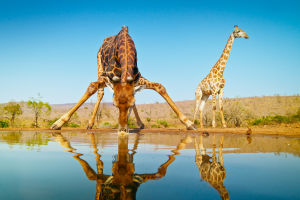
Example: When feeding on a tall tree, giraffes stretch their necks and even spread their front legs wide to balance, demonstrating the combination of height and flexibility that defines their feeding strategy.
Unique Feeding and Digestive Habits
Giraffes are selective eaters, relying heavily on specific trees and shrubs to survive in their habitat.
1. Leaf preferences – They primarily consume acacia leaves but also feed on mimosa and wild apricot. Their prehensile tongues, which can be up to 50 centimeters long, allow them to grasp leaves even among thorns.
2. Specialized digestion – Giraffes are ruminants, meaning they chew cud. This process maximizes nutrient extraction from leaves that are often fibrous and low in water content.
3. Water intake – Despite access to water, giraffes can go for several days without drinking, obtaining hydration from the moisture in leaves.
Practical observation: In a wildlife reserve, you might notice giraffes favoring certain trees while ignoring others. Watching which branches they reach for and how they use their tongues provides insight into their selective feeding habits.
Social Structure and Communication
Giraffes may appear solitary, but their social dynamics are more complex than they seem.
1. Loose herds – They form fluid groups that change daily. Herd size can range from a few individuals to over 20. This flexibility helps them avoid predators while maintaining social interaction.
2. Necking behavior – Male giraffes engage in gentle or vigorous necking, swinging their heads to establish dominance or compete for mates.
3. Communication methods – While largely quiet, giraffes use infrasound, body posture, and subtle movements to communicate. This allows them to stay aware of potential threats and coordinate with herd members.
Example: During a morning observation, males might engage in light necking, swaying their heads back and forth without physical harm. This social ritual balances hierarchy while minimizing risk of injury.
Reproduction and Calving
Giraffe reproduction is fascinating due to the species' height and gestation requirements.
1. Gestation period – Female giraffes carry calves for approximately 15 months, giving birth standing up. This drop from nearly 2 meters onto the ground helps stimulate the newborn's first breaths.
2. Calf survival – Young giraffes can stand and walk within a few hours. This mobility is crucial to evade predators such as lions or hyenas in their early weeks.
3. Maternal care – Mothers keep calves close for protection but may join “nursery herds” where multiple calves stay together under the supervision of older giraffes.
Observation: In safari parks, watching calves move awkwardly but quickly among adults is a reminder of the species' adaptation for survival from day one.
Patterns, Camouflage, and Defense
Giraffe spots are more than aesthetic—they are functional in the wild.
1. Individual patterns – Each giraffe has a unique arrangement of spots, much like a human fingerprint. These patterns help researchers identify individuals for study.
2. Camouflage – Irregular shapes and colors blend with tree shadows and sunlight, providing protection against predators despite their large size.
3. Kicking defense – Giraffes can deliver powerful kicks in any direction. A well-aimed kick can deter lions, making this a key survival tactic.
Example: Observing a herd in late afternoon light, the contrast of spot patterns against dappled foliage illustrates how giraffes naturally hide while foraging.
Reflections on Giraffes
Giraffes are more than towering creatures—they are living examples of evolution, adaptation, and subtle intelligence. Their anatomy, feeding habits, and social behaviors reveal a species finely tuned to its environment. Watching a giraffe interact with its herd, reach for thorny leaves, or balance its long limbs is a lesson in patience and observation. The next time you see a giraffe, whether in a reserve or documentary, take a moment to appreciate the combination of height, grace, and survival strategies that make this animal so extraordinary.