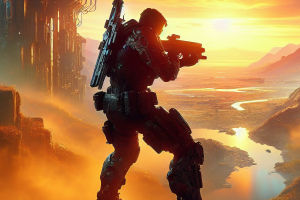
Star Wаrs: Zero Company takes a familiar tactical foundation and pushes it much further than expected. At first glance, it looks like an obvious combination: turn-based squad combat, cover systems, customizable and permanent consequences, all wrapped in Star Wаrs.
But the game’s strongest achievement is how confidently it blends that structure with a character-driven story, elaborate missions and polished third-person exploration. The result feels less like a Star Wаrs version of XCOM and more like a full tactical RPG that happens to understand exactly why XCOM works.
A Crew Worth Following
The story unfolds near the end of the High Republic era and follows Hawks, a disgraced former Republic officer who leads a mercenary unit known as Zero Company.
Hawks can be customized extensively, including appearance, species, gender, clothing and combat class. Despite that freedom, the character still has a defined personality and role in the story, giving players enough ownership without turning the protagonist into a blank slate.
The supporting cast is even stronger. Zero Company follows the familiar “found family” formula, but the relationships are not constantly friendly. Crew members argue, carry old grudges and bring conflicting loyalties into the group.
Former Separatists are particularly interesting because their presence creates genuine tension with characters connected to the Republic. As the campaign progresses, the story becomes unexpectedly heavy. Major characters can leave permanently, and several later twists dramatically alter the group dynamic.
The emotional stakes work because the game spends enough time making its crew feel like people rather than tactical units.
The Den Feels Alive
Between missions, players return to the Den, a small headquarters inside a smuggler settlement built into an asteroid. Instead of navigating everything through menus, you control Hawks directly in third person. The exploration itself is simple. Most activities involve walking between characters, interacting with objects or collecting small bonuses. Yet the presentation makes a major difference. Environments are detailed, characters move naturally around the base, and recruited mercenaries appear in different areas having conversations.
Generic operators also receive personalities and voice performances, which helps them feel connected to the wider story. From the Den, players can send agents on text-based espionage operations before selecting the next major combat assignment.
Combat Stays Tactical
Once fighting begins, the camera pulls back and the game becomes a traditional turn-based tactics experience. Squads are limited to four characters. Mission objectives include hostage rescues, theft, sabotage, extraction and direct combat, but the campaign frequently adds complications that prevent objectives from feeling repetitive. Enemies may appear behind the squad during an escape, reinforcements can block an extraction route, and environmental hazards often force players to keep moving.
One mission turns a narrow bridge into an expanding danger zone while enemies continuously appear ahead. Another temporarily gives the squad an overwhelmingly powerful unit, reversing the usual escort-mission formula. The strongest missions do not simply ask players to eliminate enemies; they introduce mechanical surprises that change how the battlefield must be approached.
Difficulty Finds Balance
The standard difficulty creates pressure without constantly punishing experimentation. Characters can be knocked down, positions can collapse quickly and poorly planned attacks often leave the squad vulnerable to counterattacks. At the same time, the campaign rarely feels unfair. Enemy placement encourages careful movement, while powerful snipers and unexpected reinforcements prevent players from becoming too comfortable. Permadeath adds another layer of tension.
A recruited character can potentially disappear permanently, taking future conversations and story moments with them. Even players who never lose anyone will feel the threat hanging over difficult missions.
Builds Become Surprisingly Deep
Zero Company also contains more character customization than its cinematic presentation initially suggests. Each class develops differently, and multiclassing opens more complicated combinations later in the campaign. The Gunslinger, for example, becomes stronger by making repeated attacks and can recover action points after killing weaker enemies. That creates opportunities to eliminate small targets before using increased damage against tougher opponents.
Astromech droids fill an entirely different role. They cannot attack directly, but can restore action points and carry additional utility items, making them extremely valuable support units.
The class system rewards experimentation without becoming so complicated that players need spreadsheets to understand every decision.
Cinematic Without Losing Depth
One of the game’s biggest accomplishments is presentation. Major missions include cinematic exploration sequences before battles, allowing players to walk through environments at ground level before the perspective changes seamlessly into tactical combat.
That extra context makes locations feel like real places instead of abstract grids. It also allows the campaign to deliver impressive set pieces without abandoning the slower tactical structure. This combination gives Zero Company an unusual sense of scale for the genre.
Technical Problems Remain
The game is not completely polished. Crashes, graphical glitches, occasional interface flickering and long pauses during enemy turns can appear. Exploration sections are also extremely linear, and the constant waypoint marker feels unnecessary when there is usually only one possible direction. Performance on Steam Deck is another major weakness.
Even at reduced settings, the game struggles badly enough that portable play is difficult to recommend. Some technical issues may improve through updates, but the limited exploration design is more fundamental.
A Complete Star Wаrs RPG
Zero Company may borrow heavily from established tactical games, but it rarely feels like a simple imitation. Its combat is strong enough for strategy fans, its RPG systems offer meaningful experimentation, and its cinematic presentation makes the campaign accessible without stripping away complexity.
Most importantly, the story gives every tactical decision more weight.
Star Wаrs: Zero Company succeeds because its battles, characters and narrative consequences reinforce one another. It delivers the strategic satisfaction of a squad tactics game while creating the kind of dramatic Star Wаrs adventure that players may remember long after the final mission ends.