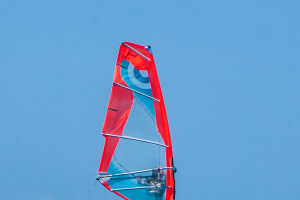
Hi, everyone. Most beginners think windsurfing is about holding on tight while the wind drags them across the water.
It isn't. The riders who progress fastest are the ones who spend their first hour learning to read the wind and stand relaxed on the board, not the ones who grip hardest.
Read the wind before you rig
You can't balance against something you haven't measured. Before you touch the sail, stand on shore and watch the water for a full minute. Look for the dark patches that signal gusts, and note the direction the ripples travel. A simple handheld anemometer tells you the real number: anything under about 8 knots is too light to plane, and above roughly 18 knots is too much for a first session. Most schools run beginner lessons in the 10 to 15 knot range for a reason. That's enough power to move you and gentle enough that a mistake doesn't launch you.
Stand wide, not stiff
The board feels unstable the moment you step on, and your instinct is to tense up. Do the opposite. Place your feet shoulder-width apart, straddling the centerline, and keep your knees slightly bent. Your weight should sit over the middle of the board, not the tail. On a typical 200 to 240 liter beginner board, that wide stance is what keeps the nose from diving when a gust hits. Think of your legs as shock absorbers, not posts.
The sail is your balance pole
Here's the flip most people miss: the sail doesn't just catch wind, it steadies you. Hold the boom with light hands and let the sail tilt slightly away from you into the wind. When you feel the board tipping, sheet in a touch or lean the rig toward the low side. The sail's pull actually counteracts the roll. Many beginners clutch the boom in a death grip and fight the rig, which makes everything wobble more. Loosen your fingers and let the sail do its job.
Steer with your hips
Turning doesn't come from yanking the boom. It comes from shifting weight. To bear away, push your hips toward the nose and lean the rig forward. To head up into the wind, drop your weight back and ease the sail out. On flat water at a slow speed, small hip movements of a few inches are enough to change direction. Practice this in light wind before you add speed. A beach with waist-deep water and onshore breeze, common at spots like the shallow bays used for beginner courses, gives you a safe place to bail out and walk back.
Fall early, fall often
You will end up in the water. That's fine, and it's actually part of learning. The key is falling safely: let go of the boom, keep your arms in, and fall flat rather than reaching out with a stiff arm. Water starts out cool even on warm days, so a 3mm wetsuit keeps you comfortable through a two-hour session. Budget around 60 to 100 USD for a group beginner lesson at most schools, which usually includes the board, rig, and wetsuit. That's cheaper than buying gear before you know you'll stick with it.
Build balance on land first
Ten minutes of dry practice saves you an hour of splashing. Stand on a balance board or a cushion and hold a light dumbbell out to one side, mimicking the sail's pull. Or just practice the stance on the beach with your feet wide and knees soft until it feels normal. Riders who've done a little balance work on land get on the board with far less hesitation. It's the same principle as learning to skate: get comfortable with the instability before you add motion.
You're not fighting the wind out there, you're using it. Keep your stance wide, your grip light, and your eyes on the water ahead. Next time you're at the shore, spend five minutes just watching the surface before you rig up. That habit alone will make your first session smoother.